




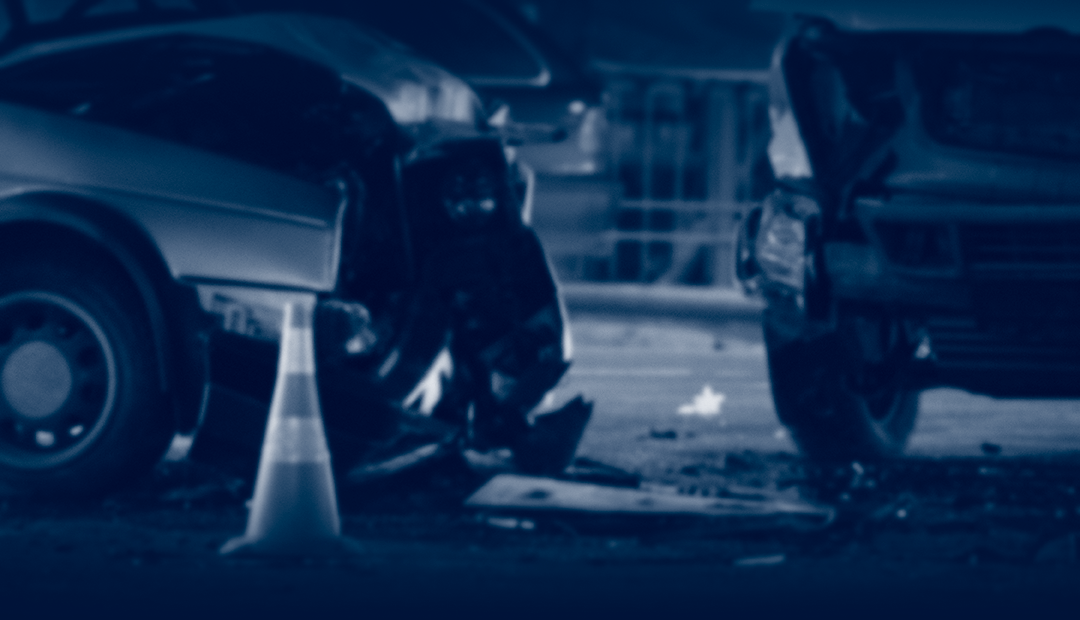
The Poplar Street Bridge sits directly on the Missouri-Illinois state line, and that geography creates a legal problem most accident victims don’t see coming.
Missouri and Illinois have fundamentally different rules for personal injury claims.
- In Missouri, you can recover damages even if you’re found mostly at fault for the accident; your compensation just gets reduced by your percentage of blame. In Illinois, if you’re found 51% or more at fault, you get nothing.
- Missouri gives you five years to file a lawsuit. Illinois gives you two.
The second problem is the pileup itself. When multiple trucks are involved, every trucking company and insurer points fingers at everyone else. Perhaps the company whose driver rear-ended you will blame the truck ahead of them for braking suddenly. That company will claim an unidentified car cut them off and disappeared. Meanwhile, all of them are looking for ways to shift fault onto you, especially because under Illinois law, pushing your fault percentage above 50% eliminates their obligation to pay entirely.
Sorting this out requires pulling data from every truck’s black box, subpoenaing driver logs and dispatch records, and reconstructing the sequence of the crash to determine who actually set the chain reaction in motion. That evidence is stored by the trucking companies, and federal law doesn’t require them to keep it forever.
If you were injured in a multi-vehicle truck accident on the Poplar Street Bridge, call DM Injury Law for a free consultation. Our truck accident attorneys bi-state claims across the St. Louis metro and know how to work the jurisdictional issues in your favor.
Call (314) 557-4659 or contact us online today for a free consultation.
Key Takeaways for Poplar Street Bridge Pileup Victims
- Liability is shared and disputed. In a multi-truck pileup, multiple parties are usually at fault, and their insurance companies will try to blame others to minimize their payout.
- The crash location dictates the law. Whether the accident occurs on the Missouri or Illinois side of the bridge determines which state’s laws on fault and filing deadlines apply, significantly impacting your case.
- Federal trucking regulations are key evidence. Proving a driver or company violated Federal Motor Carrier Safety Regulations, such as limits on driving hours, is powerful evidence of negligence.
Why the Poplar Street Bridge Is a Catalyst for Catastrophe
The Poplar Street Bridge is the convergence point for three major interstates: I-64, I-55, and I-70, and funnels more than 100,000 vehicles between Missouri and Illinois every day. With lanes narrower than modern standards and some of the most difficult, weaving merges in the region, the bridge’s very design sets the stage for disaster.
This design becomes particularly dangerous when commercial trucks are involved. A pileup on the bridge is not a single impact but a violent chain reaction. One truck braking suddenly might force the one behind it to brake, and so on, until a driver who is distracted, fatigued, or following too closely is unable to stop in time. A collision involving a semi-truck and a dump truck may instantly block all eastbound or westbound lanes, creating a domino effect of secondary crashes.
These hazardous conditions, when combined with a truck driver’s negligence, create a legal explosion. To unravel who is at fault, the first step is to establish what caused the pileup in the first place.
The Anatomy of a Pileup
In a typical chain-reaction pileup, fault typically starts with the truck at the very back of the line. That driver had the most time and distance to see the slowing traffic ahead and take preventive action. Their failure to do so frequently points to a clear violation of their duty to maintain a safe following distance.
However, every driver in the chain has a duty to control their vehicle, and a thorough investigation usually reveals multiple points of failure. The goal of an investigation is to determine which driver’s negligence set the catastrophic events in motion.
The Blame Game: How Liability Is Determined in Multi-Truck Crashes
In a multi-truck pileup, you should expect every involved trucking company to point the finger at someone else. This is a common legal tactic also called the empty chair defense, where each defendant tries to pin the blame on another party—including you or a driver who is not part of the lawsuit—to minimize their own financial responsibility.
Key Legal Concepts in a Pileup
- Vicarious Liability: This is a legal doctrine that holds an employer responsible for the negligent acts of an employee. In most cases, you are not suing only the truck driver. You are pursuing a claim against the motor carrier—the company that hired, trained, and dispatched that driver. This is because the company is generally in a better financial position to cover the extensive damages caused by a commercial truck crash.
- Joint and Several Liability: This principle benefits a victim and applies in situations where multiple parties are at fault. Depending on the jurisdiction, if one trucking company is found 10% at fault and another is 90% at fault, you could recover the full amount of your damages from the company that is only 10% responsible if the other is underinsured or bankrupt.
- The Phantom Vehicle Defense: Truck drivers sometimes claim they were forced to brake suddenly or swerve because an unknown car cut them off and then sped away. While this may be a legitimate defense, it is also used to deflect responsibility when no other explanation exists. Without independent witnesses or dashcam footage, overcoming this defense requires a skilled investigation to find inconsistencies in the driver’s story.
These defenses are designed to create confusion and doubt. The legal system uses the principle of Comparative Fault to sort it out. This involves assigning a percentage of blame to each party involved in the crash. That percentage then determines how much compensation you might recover. Preserve evidence immediately after a crash to prevent these defenses from gaining traction.
The Bi-State Legal Maze: Missouri vs. Illinois Law
The Poplar Street Bridge’s position on the state line means a crash is a jurisdictional puzzle. The exact point of impact—whether it was a few feet into the East St. Louis side or on the St. Louis side—determines which rules you need to follow.
Comparative Fault Rules
How states handle shared fault is one of the most important distinctions in any personal injury case.
- Missouri: Pure Comparative Fault. Missouri operates under a pure comparative fault system. This means you may recover damages even if you are found to be partially or even mostly at fault for the accident. The law, found in Missouri Revised Statutes § 537.765, ensures that a person is not completely barred from recovery unless they are 100% responsible.
- Illinois: Modified Comparative Fault. Illinois uses a modified comparative fault system with a 51% bar to recovery. Under 735 ILCS 5/2-1116, you may only recover damages if you are found to be 50% or less at fault. If your percentage of fault is determined to be 51% or higher, you are barred from recovering anything at all.
Statute of Limitations
The deadline to file a personal injury lawsuit also differs dramatically between the two states.
- Illinois: You have two years from the date of the injury to file a lawsuit. This is governed by 735 ILCS 5/13-202.
- Missouri: You have five years from the date of the injury to file. This longer window is established by Missouri Revised Statutes § 516.120.
Proving Negligence: The Role of Federal Regulations (FMCSRs)
The Federal Motor Carrier Safety Administration (FMCSA) establishes strict rules for the trucking industry, and proving a FMCSA violation of these rules is evidence of negligence.
The Regulations That Keep Our Roads Safe
Several key federal and state regulations commonly play a role in pileups:
- 49 CFR Part 392: This section of the federal code covers the basics of safe operation for commercial motor vehicles. It includes rules prohibiting distracted driving, drug and alcohol use, and operating a vehicle when ill or fatigued.
- Hours of Service (HOS): These are some of the most frequently violated regulations. The FMCSA limits truck drivers to a maximum of 11 hours of driving within a 14-hour window, after which they must take 10 consecutive hours off duty. When the rearmost truck in a pileup fails to brake, driver fatigue in violation of HOS rules is a primary cause in many cases.
- Following Distance: Illinois law specifically addresses the issue of following too closely. 625 ILCS 5/11-710 requires drivers to maintain a “reasonable and prudent” distance from the vehicle in front, considering speed and road conditions.
The Black Box: A Digital Picture of Negligence
Modern semi-trucks are equipped with an Event Data Recorder (EDR) or Engine Control Module (ECM), also called a black box. This device records data in the seconds leading up to a crash, such as vehicle speed, brake application, steering input, and RPMs. Paired with data from the driver’s Electronic Logging Device (ELD), which tracks HOS compliance, these digital records create an undeniable picture of what the driver was doing or not doing right before the impact.
Act quickly to preserve this data. Trucking companies are not required to save this information indefinitely, and a formal letter of spoliation must be sent to ensure this evidence is not erased or overwritten.
Who Can Be Sued? Identifying All Potential Defendants
- The Truck Driver: The most obvious defendant is the driver whose direct negligence, such as speeding, distraction, or following too closely, caused the collision.
- The Trucking Company: As mentioned, the motor carrier is vicariously liable for the driver’s actions. They may also be directly negligent for failures in hiring, training, or supervision, such as putting a driver with a poor safety record on the road.
- The Cargo Loader: Trucks may become unstable and more prone to tipping or jackknifing if their cargo is improperly loaded or secured. The company responsible for loading the trailer could be held liable if its negligence contributed to the crash, especially on the graded curves of the bridge approaches.
- Third-Party Maintenance Providers: If a mechanical failure, like faulty brakes, was the first event in the chain reaction, the truck maintenance company that last serviced the truck may bear some responsibility.
- Government Entities (Rare): Suing a government entity is difficult due to the legal principle of sovereign immunity. However, both Illinois and Missouri have exceptions, particularly for dangerous conditions on public property or the negligent operation of government vehicles. If a road design flaw or lack of maintenance by IDOT or MoDOT was a willful and wanton cause of the pileup, a claim could be possible, though these cases are exceedingly rare and have much shorter deadlines.
FAQs for Poplar Street Bridge Victims
Multiple trucking companies are involved; which insurance company do I talk to?
You should not speak with any of them without legal representation. Each company’s insurer will be looking to protect their own interests, not yours. Your attorney should handle all communications with all involved insurance carriers.
What happens if the truck that hit me was from out of state/passing through on I-70?
It doesn’t matter where the truck is from. By operating on Missouri and Illinois roads, out-of-state trucking companies are subject to the jurisdiction of the local courts and must abide by federal and state safety regulations.
The trucking company called me immediately after the crash offering a settlement; should I take it?
No. Early settlement offers are almost always low and are an attempt to resolve your claim before the full extent of your injuries and financial losses are known. Accepting an offer ends your right to seek further compensation.
Don’t Let the Insurance Companies Dictate Your Recovery
At DM Injury Law, we have deep experience in the specific bi-state legal issues of St. Louis interstate accidents. We handle the crash investigation, the jurisdiction battles, and the multi-party negotiations so you can focus on your physical recovery.
Your initial consultation is free, and we only get paid if we secure a recovery for you.
Call (314) 557-4659 or contact us online today for a free consultation.