




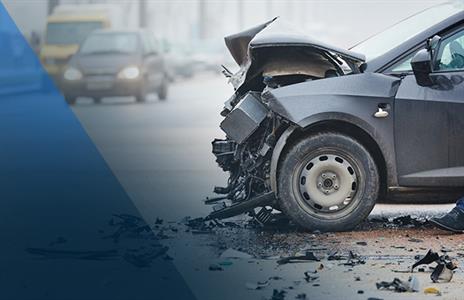
When you’re involved in a multi-vehicle collision in Omaha, determining liability is rarely straightforward. Part of the reason is that multiple parties could share some blame for the accident and the damage that follows. To top it off, unlike in a typical two-car fender-bender, you’re suddenly dealing with multiple insurance companies, each trying to point the finger at each other to minimize their financial liability.
All of this is because Nebraska follows a modified comparative negligence rule. This legal concept means that if you are found to be 50% or more at fault for the accident, you cannot recover any money for your damages. If you’re found to be less than 50% at fault, your compensation is reduced by your percentage of blame.
If you have a question about a pileup on I-80 or a chain-reaction crash in Omaha, call us today. DM Injury Law offers a free consultation.
Call (314) 557-4659 or contact us online today for a free consultation.
Key Takeaways for Omaha Multi-Vehicle Collisions
- Nebraska’s modified comparative negligence rule will reduce your recovery by your percentage of fault. This means any fault attributed to you, even a small amount, directly impacts your final compensation, and you cannot recover anything if you are 50% or more to blame.
- Objective evidence is essential to proving liability in a tangled crash. Witness memories fail, but data from vehicle black boxes, traffic cameras, and cell phone records can create a clear and scientifically accurate picture of how the collision occurred.
- Your own insurance policy’s UIM coverage may be your most important financial protection. When multiple people are injured, the at-fault driver’s minimum insurance is exhausted quickly, leaving your Underinsured Motorist (UIM) coverage to pay for the remainder of your damages.
Why Multi-Vehicle Collisions Are Legally Messy
In a typical two-car crash, the dispute is between Driver A and Driver B. It’s difficult enough. But add a third, fourth, or even fifth vehicle, and the situation becomes exponentially more tangled.
Perhaps Driver A points to Driver B, who insists Driver C is to blame, and Driver C claims they hit a patch of black ice on the bridge over the Missouri River. Everyone has a different story, and the blame game begins almost immediately.
The chaos of a multi-car pileup affects memory. As an example, witnesses who might be standing on the side of Dodge Street or stuck in the I-680 backup commonly provide contradictory statements because the events unfolded in a matter of seconds. One person saw a red car swerve; another is certain it was blue. This confusion is something insurance adjusters may use to their advantage, which is why speaking with an experienced car accident lawyer can be critical when witness accounts conflict after a serious crash.
A common tactic is for insurers to issue initial denials for all claims (a shotgun approach) to see which claimants have the evidence and persistence to push back. They might also try to assign you a small percentage of fault, like 10%, not because you did anything wrong, but because it reduces the amount they have to pay out under Nebraska’s law.
Local Omaha driving conditions add another layer of complexity. Think about the aggressive merging required near the I-80 and I-480 interchange during rush hour. Or consider the numerous construction zones on Center Street that constantly change traffic patterns. These factors may make it difficult to determine who truly had the right-of-way and who was driving carelessly for the conditions.
How Does Nebraska’s Modified Comparative Negligence Work?
The legal rule that governs fault in Nebraska car accidents is found in Nebraska Revised Statute § 25-21,185.09. It is called modified comparative negligence, but the idea behind it is simpler than its name suggests. It works in two key ways.
The 50% Bar
First, there’s the 50% bar. This rule states that you cannot recover any money for your injuries or vehicle damage if a jury determines that your own negligence was 50% or more of the cause of the accident. If your fault is determined to be 49% or less, you may still recover compensation from the other at-fault drivers.
Proportional Reduction of Damages
Second, if you are less than 50% at fault, your final compensation award is reduced by your exact percentage of fault. This means that your actions may account for a portion of the blame, and your financial recovery will be reduced by that same portion. A personal injury attorneys role is to use evidence to ensure no amount of blame is unjustly assigned to you, thereby maximizing your potential recovery from the other responsible parties.
Common Chain-Reaction Scenarios: Who Is Actually at Fault?
The Rear-End Push
This is a classic chain-reaction. Vehicle A strikes Vehicle B from behind, and the force of that impact propels Vehicle B into the back of your car.
In most cases, the driver of Vehicle A is considered at-fault for a rear-end accident because they initiated the chain of events by failing to stop in time. However, there may be exceptions. If the driver of Vehicle B, the middle car, had broken brake lights or stopped suddenly and without reason, they might share a portion of the fault.
The Phantom Driver
A driver makes an aggressive and unsafe lane change, cutting someone off and forcing them to slam on their brakes. This sudden stop causes a pileup behind them, but the driver who caused it all speeds away, never to be identified.
This phantom driver scenario is incredibly frustrating. Since the primary at-fault party is gone, your claim typically shifts to your own Uninsured Motorist (UM) coverage. Your insurance policy essentially steps into the shoes of the missing driver’s insurance.
The Sudden Emergency Defense
It’s a common claim in Nebraska winters: “I couldn’t stop because I hit black ice.” This is known as the sudden emergency defense. A driver argues that a completely unforeseen event made the accident unavoidable.
However, this defense is rarely successful. Nebraska law expects drivers to operate their vehicles in a manner that is safe for the current conditions. Ice and snow are not unforeseen emergencies in an Omaha winter; they are expected hazards. Driving too fast for the conditions is generally considered negligence, not an excuse.
Merging Accidents on I-80 and I-480
The on-ramps for major highways like I-80 and I-480 are frequent sites of multi-car collisions. The question is usually who had the duty to yield.
Typically, the driver merging onto the highway must yield to traffic already there. But if a driver on the highway sees a merging car and has a clear opportunity to move over and avoid a collision but fails to do so, they may share some liability under the last clear chance doctrine.
What Happens When Insurance Limits Aren’t High Enough?
You may win your case and prove the other drivers were at fault, only to face another daunting hurdle: there isn’t enough insurance money to cover your bills.
Nebraska requires drivers to carry a minimum of $25,000 in bodily injury liability per person and $50,000 per accident. Now, consider a five-car collision on I-80 caused by one negligent driver. If four people suffer serious injuries, that at-fault driver’s $50,000 policy limit must be split among all of them. This is a pro rata problem, where the available insurance funds are distributed proportionally based on the severity of each person’s injuries. That $50,000 pot can evaporate almost instantly, leaving you with a mountain of medical debt.
Underinsured Motorist (UIM) Comes In to Save the Day
This is precisely why Underinsured Motorist (UIM) coverage is so important. UIM is coverage you purchase on your own auto policy which acts as a safety net. When the at-fault driver’s insurance is exhausted, your UIM coverage kicks in to help cover the remaining costs of your medical bills, lost income, and other damages.
We have experience in meticulously reviewing every available insurance policy to find all potential sources of recovery. This may sometimes involve stacking, a process where multiple UIM policies within a household might be combined to provide additional coverage. The goal is to ensure you are not left paying out-of-pocket for a collision you did not cause.
Evidence We Use to Untangle Liability
While witness statements are helpful, they can be flawed. We rely on objective, scientific evidence to build a strong case and prove what really happened.
- Event Data Recorders (EDRs): Also called black boxes, EDRs are standard in most modern vehicles. These devices record critical data in the few seconds before, during, and after a crash. We can retrieve information on speed, brake application, steering angle, and seatbelt use. This data may definitively show that you applied your brakes while the driver behind you accelerated, or that a driver’s cruise control was set at a speed unsafe for the conditions.
- Traffic Camera Footage: The Nebraska Department of Transportation (NDOT) maintains a network of traffic cameras on major Omaha highways. This footage can be invaluable, but it is usually deleted quickly—sometimes within 72 hours. Always act fast to send a preservation letter to secure this evidence before it’s overwritten.
- Cell Phone Records: If we suspect a driver was distracted, we may subpoena their cell phone records. These records provide a timeline of calls, texts, and data usage, which may be cross-referenced with the time of the accident to establish distracted driving.
- Accident Reconstruction: For the most difficult pileups, we may bring in an accident reconstructionist. These are specialists, often with backgrounds in physics and engineering, who use advanced tools like drone mapping and 3D laser scanning to create a scientifically accurate recreation of the collision.
Call (314) 557-4659 or contact us online today for a free consultation.
The Role of Commercial Trucks in Omaha Pileups
The I-80 corridor is a major artery for commercial trucking. When a semi-truck is involved in a multi-vehicle crash, the legal and financial dynamics change significantly. The sheer size and weight of a commercial truck mean the injuries are frequently catastrophic.
Truck drivers and their employers are governed by a strict set of federal regulations from the Federal Motor Carrier Safety Administration (FMCSA). These rules include strict limits on how many hours a driver can be on the road. If a fatigued trucker causes a domino-effect crash because they couldn’t brake in time, we investigate their electronic logbooks for hours-of-service violations.
Furthermore, the liability commonly extends beyond the driver. Under a legal principle called vicarious liability, the trucking company may be held responsible for its driver’s negligence. We also investigate the company itself for negligent hiring practices, poor vehicle maintenance, or pressuring drivers to meet unrealistic deadlines. This is an important distinction because a trucking company’s insurance policy is typically much larger than an individual driver’s, providing a more sufficient source of compensation for the many victims of a large crash.
FAQ for Multi-Vehicle Accidents in Omaha
Can I file a claim if I was the middle car in a 3-car sandwich?
Yes. In a typical sandwich collision, the rear-most driver is presumed to be at fault for starting the chain reaction. You would primarily file a claim against that driver’s insurance. However, a thorough investigation is still needed to confirm that the driver in front of you shares no blame.
What if the police report says cause unknown or blames the weather?
A police report is an officer’s opinion based on the evidence available at the scene; it is not the final word and is usually considered hearsay in court. We conduct our own independent investigation to uncover the true cause of the crash, using accident reconstruction and data analysis that goes far beyond what an officer can do on the shoulder of the highway.
Do I have to give a recorded statement to the other drivers’ insurance companies?
No, and you should not do so without speaking to an attorney first. Insurance adjusters are trained to ask questions in a way that might get you to inadvertently admit some level of fault. Your words could be misinterpreted and used to reduce or deny your claim. It is best to let us handle all communications with other insurance companies on your behalf.
How long do I have to file a lawsuit in Nebraska?
For a personal injury claim, the statute of limitations in Nebraska is generally four years from the date of the accident (Neb. Rev. Stat. § 25-207). However, if the accident tragically resulted in a fatality, the time limit to file a wrongful death claim is much shorter—only two years from the date of death (Neb. Rev. Stat. § 30-810). We advise acting promptly to preserve evidence and protect your rights.
Don’t Let a Complicated Crash Cost You Your Future
You do not have to fight these battles on your own while also trying to recover from your injuries. Our firm handles the paperwork, the investigation, the evidence preservation, and the difficult negotiations. We understand how to piece together the puzzle of a difficult highway collision to show who was truly responsible.
You might worry about the cost of hiring a lawyer, but our firm handles these personal injury cases on a contingency fee basis. This means if we don’t secure a recovery for you, you don’t pay us anything.
Call DM Injury Law today for a free consultation regarding your Omaha car accident case. Let’s determine exactly who is at fault and ensure you are treated fairly.
Call (314) 557-4659 or contact us online today for a free consultation.