




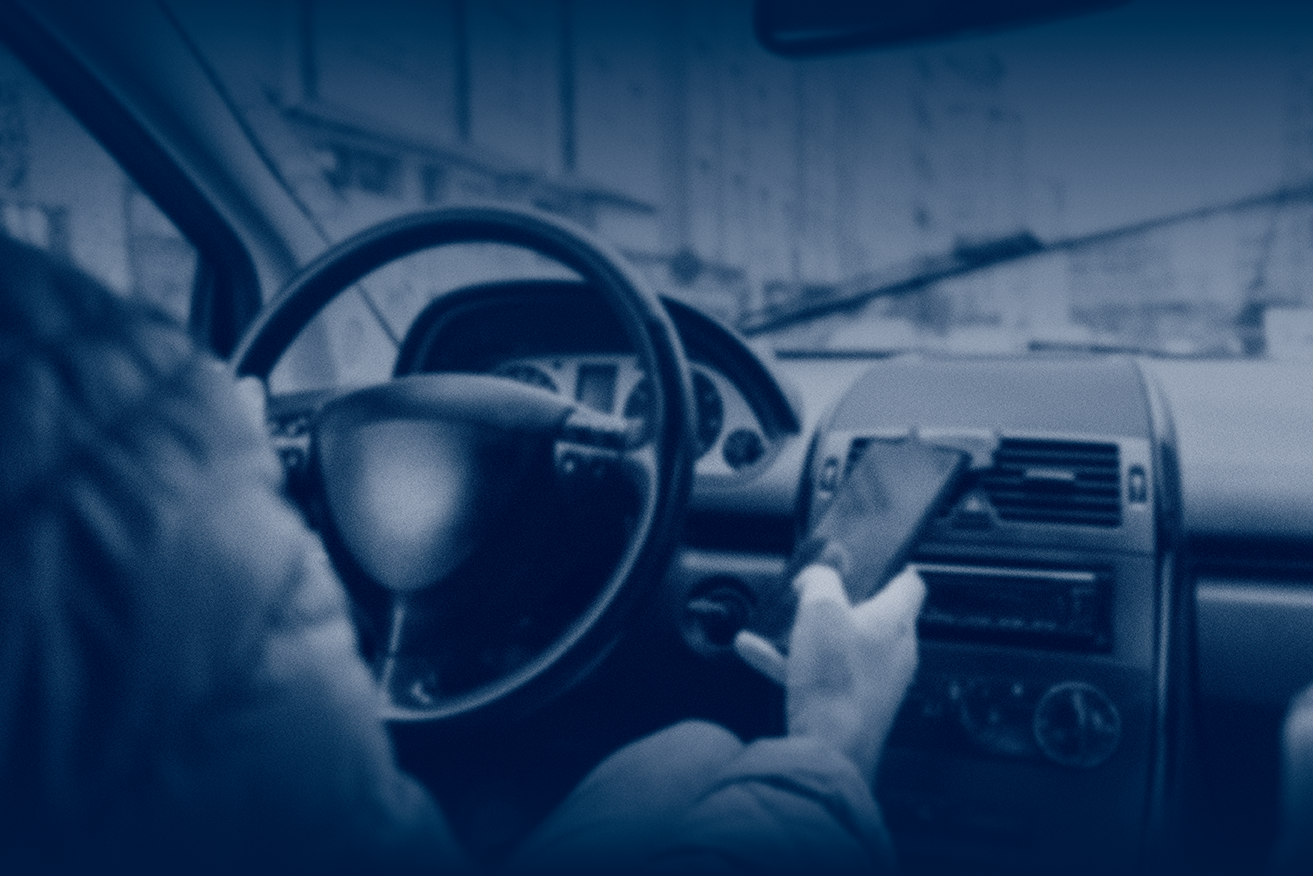
When another driver’s negligence causes a collision, proving their distraction is typically the most significant hurdle. This challenge is magnified when you suspect they were on their phone, but the police report is inconclusive. This is where subpoenaing digital data comes into play, which is the formal legal process to conclusively figuring out what really happened.
During the discovery phase of a lawsuit, this tool allows your attorney to obtain objective, time-stamped records from cellular providers like Verizon or T-Mobile. These records may pinpoint data usage, text logs, and even GPS location at the precise moment of impact, effectively bypassing the other driver’s denials.
The problem is that Omaha police rarely confiscate a driver’s phone at the scene of a typical car crash. Unless a fatality occurs or a criminal investigation is launched, distraction remains a suspicion rather than a proven fact in the initial report. This leaves a significant evidence gap for injury victims.
Obtaining these digital records on your own is not possible. The process involves handling federal laws like the Stored Communications Act, overcoming privacy objections from the at-fault driver’s lawyer, and interpreting complicated data logs. It requires a court order, which may only be secured after a lawsuit has been filed.
If you suspect the driver who hit you on an Omaha commuter route was distracted, but you lack the proof, we will help you uncover the truth. Call us today for a free consultation. There is no obligation to hire us.
Call (314) 557-4659 or contact us online today for a free consultation.
Key Takeaways for Subpoenaing Digital Data in Omaha Distracted Driving Cases
- A subpoena is a powerful tool, but it requires a lawsuit. You cannot get phone records directly from a cell provider; your attorney must first file a personal injury lawsuit to begin the formal discovery process.
- Metadata is often sufficient to prove distraction. Even without the content of texts, records showing the time, date, and data usage can create a clear timeline of a driver’s negligence at the moment of impact.
- Acting quickly is essential to preserve evidence. Your car accident attorney needs to send a formal preservation letter immediately to prevent the at-fault driver from deleting data, as digital evidence can be altered or purged over time.
The Role of Digital Forensics in Omaha Personal Injury Cases
In Nebraska, distracted driving crashes remain a significant safety concern. After a collision, the other driver’s memory of events will almost certainly be subjective and self-serving. The data on their phone, however, is objective. It doesn’t have a vested interest in the outcome of your claim.
Digital forensics transforms a standard car accident case into a data-driven investigation. We are searching for a pattern of engagement rather than a single smoking gun text message. Was the phone unlocked? Was data being actively transmitted? Was an app consuming bandwidth in a way that suggests user interaction rather than just running in the background? This is the kind of detail that may dismantle a defense.
We move quickly to send preservation letters to the at-fault driver and their insurance company. This is a formal demand that they do not delete, destroy, or alter the phone and its data. As an experienced personal injury lawyer, we know this step is foundational because it sets the stage for holding them accountable if evidence suddenly disappears.
The Legal Process of Subpoenaing Phone Records in Nebraska
The first step in this investigative process happens long before a judge ever sees the case. It starts with what is known as a spoliation letter or a preservation demand.

We send this formal notice to the at-fault driver and their insurance carrier, instructing them to preserve the cell phone and all related electronic data. If they delete information after receiving this letter, they could face serious legal sanctions from the court. This initial action protects the evidence and strengthens your legal standings in personal injury case while we prepare to file a lawsuit.
Who Can File a Subpoena?
It is a common misconception that anyone can simply demand phone records. You cannot issue a subpoena just to go fishing for information. The power of a subpoena is only unlocked after a personal injury lawsuit is filed in the appropriate Nebraska court, such as the Douglas County District Court. Filing the lawsuit officially begins the legal process and allows us to enter the discovery phase.
Discovery is the part of a lawsuit where both sides exchange information. We use a formal tool called a Request for Production to demand specific evidence. This may include:
- The Physical Device: We may request access to the phone itself to create a forensic image, which is an exact copy of all its data, including fragments of deleted files.
- Carrier Records: We also demand the call detail records (CDRs) directly from the service provider (e.g., Verizon, AT&T).
Metadata vs. Content of the Message
There is a legal distinction between getting metadata versus the content of a communication. Metadata is the data about the data: who called or texted, what time the communication happened, and how long it lasted. Content is what was actually said in the message or conversation.
While the Stored Communications Act may sometimes make obtaining the content of texts more difficult in civil cases, the metadata alone is often enough to prove the driver was actively and negligently using their device. Once discovery is open, we may serve a legally binding subpoena on the legal compliance departments of the major cell carriers, compelling them to release these logs.
Types of Digital Evidence We Analyze to Establish Negligence
The at-fault driver will almost always have a defense ready. They might claim, “I wasn’t texting; I was just using my GPS,” or, “I was on a hands-free call, which is legal.” While Nebraska law does ban texting for all drivers, the nuances of phone use may complicate a case.
A simple call log showing a Bluetooth call might not be enough to prove negligence on its own. The defense attorney will argue that the driver was complying with the law and was not distracted. This is where a deep dive into the data becomes necessary. We work with forensic experts to analyze specific data points that may refute these common defenses.
The Evidence We Look For
- Timestamp Synchronization: We can typically get data from the car’s event data recorder (EDR), or black box, which tells us the exact moment of impact. We then sync this time, down to the millisecond, with the phone’s data transmission logs. This creates an undeniable timeline of activity leading up to the crash.
- Data Transfer vs. SMS Logs: We can distinguish between passive data usage (like an app updating in the background or music streaming) and active user engagement. Swiping on social media, typing a search into a browser, or engaging with an app requires active data inputs that look very different from passive data streams.
- GPS Pings & Cell Tower Triangulation: This data can show that the phone was not only active but also in motion along a specific route, like I-80, at the time of the crash. This helps counter claims that a passenger was using the phone.
- Unlock and Wake Logs: Many smartphones keep a log of when the screen is woken up or unlocked. Evidence that the screen was unlocked just seconds before the collision is powerful proof of visual and cognitive distraction.
Overcoming Nebraska’s No Statewide Handheld Ban Defense
A significant challenge in Nebraska is that, unlike many other states, there is no total ban on using a handheld cell phone while driving for all drivers. The law specifically targets texting and other forms of written communication. Defense lawyers typically use this fact to argue that if their client was merely talking on the phone, they did nothing illegal.
However, there is a clear difference between a criminal violation and civil liability. To win your personal injury case, we do not need to prove the other driver committed a crime. We only need to prove they were negligent one of the key reasons it matters when you hire a personal injury law firm with experience handling civil claims.
Negligence is a legal concept that simply means a person failed to use a reasonable level of care, and that failure caused harm to someone else. Even if talking on a handheld phone is legal in some contexts, it can absolutely be negligent. If that phone call caused the driver to take their eyes off the road, drift out of their lane on West Dodge Road, and collide with your vehicle, they have breached their duty of care and are liable for your damages.
Call (314) 557-4659 or contact us online today for a free consultation.
Challenges and Privacy Objections in Discovery
It is standard practice for a defense attorney to object to a subpoena for phone records. They will typically argue that the request is overly broad, a fishing expedition, or an improper invasion of their client’s privacy. They may try to delay or block the release of the information.
We anticipate these objections and are prepared to counter them in court. We do this by:
- Narrowly Tailoring the Request: We do not ask for a year’s worth of data. We typically limit our subpoena to a very specific timeframe, such as the 15 minutes immediately preceding the crash, which courts are much more likely to approve.
- Using Protective Orders: We may agree to a protective order, which is a court order that keeps the data confidential and ensures it is used only for the purposes of the personal injury lawsuit. This helps address legitimate privacy concerns while still allowing us to access the evidence needed to prove your case.
Ultimately, we argue that your right to be compensated for your injuries, medical bills, and lost wages outweighs the other driver’s desire to keep their negligent actions hidden.
FAQ for Subpoenaing Digital Data in Car Accident Cases
Can you recover deleted text messages?
Sometimes. Even if the content of a message is deleted from the phone, the cell carrier retains metadata—proof that a message was sent or received—for a significant period, commonly one to two years. Furthermore, if we can act quickly to get a forensic image of the physical phone, our experts may frequently recover data that has been deleted but not yet overwritten on the device’s flash memory.
What if the driver was using an app like Snapchat or WhatsApp?
These applications all use data, and that data usage is recorded. We look for spikes in data consumption that correlate with the time of the crash. In cases involving severe injuries or fatalities, it is also possible to subpoena the app developers themselves for user records, though this is a more complicated legal process.
Can we subpoena a passenger’s phone?
This is generally not possible unless there is specific evidence to suggest the passenger was actively distracting the driver in a way that contributed to the crash, for example by showing them a video on their phone. The privacy protections for a non-driver are considerably higher.
Who pays for the forensic analysis?
At DM Injury Law, our firm advances all costs of litigation. This includes the fees for hiring digital forensic specialists to analyze the data. We are only reimbursed for these expenses from the final settlement or verdict we secure for you.
Does this apply to Uber/Lyft drivers in Omaha?
Yes. In fact, the case for subpoenaing data from a rideshare driver is often even stronger. In addition to their personal cell records, these drivers generate a massive amount of electronic data through their company’s dispatch application, which tracks their speed, location, braking, and screen interactions with the app.
Secure the Evidence Needed to Validate Your Claim
You know what you saw in the moments before the crash. Do not let a negligent driver’s denial or a vague police report prevent you from getting the compensation you need to recover.
The digital trail does not lie. Subpoenaing electronic data is one of the most effective tools in modern personal injury law, but the opportunity to use it is limited. Over time, data is overwritten, phones are damaged or replaced, and carrier records are purged. Acting quickly is key.
You do not have to confront the insurance companies by yourself, and you do not need to be a technology expert to prove what happened. Our team at DM Injury Law handles the legal preservation demands, the court filings, the subpoenas, and the forensic analysis.
If you are worried about the cost, know that it costs you nothing out of pocket to begin this investigation. If you were injured on an Omaha road and believe the other driver’s phone was a factor, let us work to secure the records before they are gone forever. Call DM Injury Law today for a strategic review of your case.
Call (314) 557-4659 or contact us online today for a free consultation.