




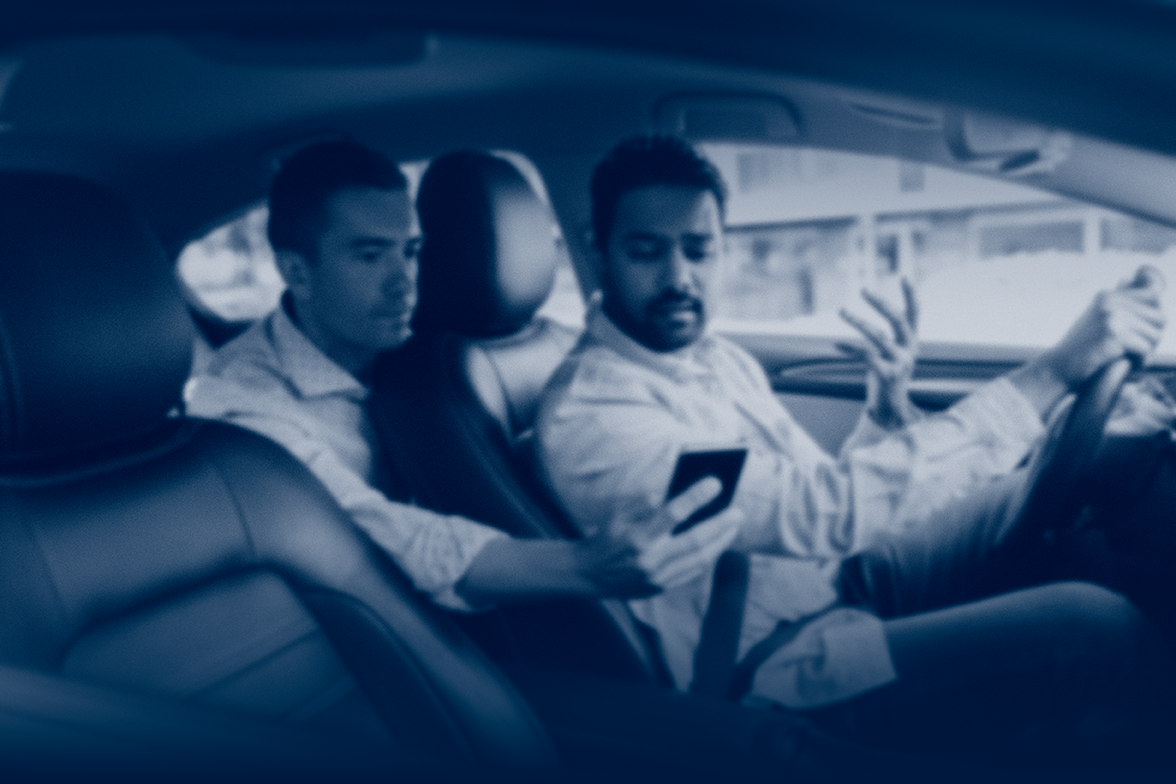
College campuses concentrate inexperienced drivers in heavy traffic while they juggle multiple distractions. The University of Tulsa and OSU-Tulsa campuses see regular accidents involving students who split their attention between phones, navigation apps, and the demands of campus life.
Knowing the risks near universities and your options after a crash with a distracted student helps protect your recovery.
Call (918) 398-0934 or contact us online today for a free consultation.
Key Takeaways for University-Area Distracted Driving Accidents
- TU students cluster near 11th Street and Harvard Avenue. OSU-Tulsa at 700 N. Greenwood Avenue sits by I-244 and Highway 75. Both areas create high-traffic zones where stressed students navigate while using devices.
- Oklahoma requires drivers to devote full time and attention to driving under 47 O.S. § 11-901b and bans texting under 47 O.S. § 11-901d, giving victims statutory grounds for negligence per se claims against distracted student drivers.
- As of November 1, 2025, Oklahoma law bans all handheld cell phone use in active school and construction zones under House Bill 2263, requiring hands-free technology in these marked areas. Enhanced privacy protections prevent law enforcement from accessing phone data without warrants.
- Many college students carry minimal insurance or drive uninsured, complicating recovery for victims who may need underinsured motorist claims or alternative strategies when student drivers lack adequate coverage.
Why University Areas See More Distracted Driving Accidents
College campuses create the perfect conditions for driver distraction. Students juggle academic deadlines, social commitments, jobs, and constant digital communication while operating vehicles in congested areas with heavy pedestrian traffic.
A concentration of young, inexperienced drivers raises crash risk, especially when inattention meets heavy pedestrian traffic and complex intersections.
The University of Tulsa Campus Environment
TU’s 209-acre campus near 11th Street and Harvard Avenue creates multiple distraction scenarios. Students navigate residential neighborhoods, busy commercial corridors, and campus roads where pedestrians cross frequently between buildings.
Harvard Avenue carries heavy north-south traffic through campus. Students driving between classes, heading to off-campus housing, or leaving for work face constant navigation decisions while managing phones and passengers.
OSU-Tulsa’s Commuter Campus Challenges
OSU-Tulsa at 700 N Greenwood Avenue creates different risk patterns. This commuter campus draws students who drive from throughout the metro area, often navigating unfamiliar routes using GPS while rushing to make class times.
The campus sits near I-244 and Highway 75, where students merge onto high-speed roads immediately after leaving campus. Free parking encourages more student driving, increasing student vehicles on surrounding roads. Commuter students often arrive stressed and leave exhausted, frequently checking phones for messages accumulated during class.
Common Distraction Scenarios Involving Student Drivers
Students exhibit predictable distraction patterns that lead to collisions around university areas. Understanding these common scenarios helps accident victims recognize when evidence may support claims against distracted drivers.
Phone Use and Social Media
Students maintain constant digital connection through phones. Younger drivers report higher rates of phone use while driving, making phone distraction the primary risk around campus areas.
Many students think quick phone glances are safe. Those glances still take eyes off the road during critical seconds when traffic changes.
Navigation and GPS Distraction
Many students drive unfamiliar routes, especially during first semesters or when traveling to new off-campus locations. Reliance on GPS creates visual, manual, and cognitive distraction as students look at screens, adjust routes, and process directions while navigating complex intersections.
Students often program navigation while driving instead of before departing. They also adjust routes mid-trip when GPS suggests alternatives, pulling attention from traffic.
Passenger Distraction
Students frequently drive with friends as passengers. Conversations about classes, relationships, or plans create cognitive distraction. Passengers show students content on phones or create visual distraction by moving around the vehicle.
Common distraction sources involving student drivers include:
- Texting while navigating to campus or off-campus destinations
- Using social media at stoplights and in slow traffic
- Programming or adjusting GPS mid-trip
- Taking or making calls while merging onto highways
- Eating breakfast or lunch while driving between commitments
These behaviors violate Oklahoma’s requirement that drivers devote full time and attention to driving under 47 O.S. § 11-901b and the texting ban under 47 O.S. § 11-901d, creating statutory grounds for negligence per se claims.
High-Risk Areas Around Tulsa Universities
Specific locations near TU and OSU-Tulsa see concentrated accident patterns involving distracted drivers. Recognizing these high-risk areas helps victims understand whether location factors contributed to their collisions.
University of Tulsa Area Intersections
Harvard Avenue intersections throughout the TU campus area handle heavy student traffic. 11th Street and Harvard Avenue form a major crossing point where distracted students checking phones fail to observe signal changes or misjudge turning gaps.
51st Street and Harvard Avenue south of campus experiences congestion during peak times. Students rushing to or from campus make hasty decisions while distracted by phones. Red-light running occurs regularly when drivers focus on devices rather than signals.
Residential streets surrounding TU see students driving to off-campus housing while distracted. These narrower roads with street parking and pedestrian activity require constant attention that distracted drivers fail to provide.
OSU-Tulsa Area Risks
On Greenwood Avenue near campus, students enter and exit while heading to nearby highway ramps. The proximity to I-244 means students often drive distracted immediately before merging onto high-speed traffic.
At the Highway 75 and I-244 interchanges, students make complex navigation decisions while checking GPS. High speeds and multiple lanes require full attention, but students focused on devices misjudge merges or drift between lanes.
Accident Patterns Around Both Campuses
Rear-end collisions occur frequently when distracted students fail to observe stopped or slowing traffic. Lane drift accidents happen when students look at phones, allowing vehicles to cross into adjacent lanes or drift toward parked cars.
Pedestrian accidents create severe injury risks when distracted student drivers fail to observe people crossing near campuses. High pedestrian volumes during class transitions mean any moment of inattention can result in tragic outcomes.
Evidence in Claims Against Distracted Student Drivers
Building strong cases against distracted university students requires specific evidence types that prove inattention caused the collision. Multiple evidence sources typically combine to overcome driver denials and establish statutory violations.
Campus Security and Police Reports
Both TU and OSU-Tulsa maintain security departments that respond to on-campus accidents. Campus security reports can supplement police reports and are often considered by insurers. They document circumstances, driver statements, and officer observations.
While campus and police reports can document observed distraction, direct access to student phone data is restricted by privacy rules requiring a court order or probable cause in criminal cases. Oklahoma’s new distracted driving law includes privacy protections preventing law enforcement from accessing a driver’s phone data without a warrant or probable cause.
Tulsa Police Department reports provide official documentation when accidents occur on public roads near campuses and carry weight with insurance companies during claim evaluation.
Witness Testimony From Other Students
College students witness distracted driving regularly around campuses. Other students often observe drivers looking down at phones or making hand gestures consistent with texting.
Independent student witnesses are usually more neutral than passengers in the at-fault vehicle and can describe what they saw without bias.
Phone Records and Digital Evidence
Civil litigation allows attorneys to obtain phone records through subpoenas after filing suit. These records show call activity, text timestamps, and data usage that can establish phone activity at the collision moment.
Social media activity can be additional evidence. Students sometimes post immediately before or after accidents, with timestamps showing they were using phones while driving. Law enforcement generally needs a warrant to search phone contents; civil subpoenas are the usual route to obtain phone records in injury cases.
Accident Reconstruction Evidence
Physical evidence often proves distraction when student drivers show no attempt to avoid collisions. A lack of skid marks indicates no braking, which suggests the driver never saw the hazard. Vehicle damage patterns reveal whether drivers took evasive action.
Key evidence types in student driver distraction cases include:
- Campus security reports capturing driver admissions of phone use
- Witness statements from other students who saw signs of distraction
- Phone records showing texts or calls during the collision
- Social media posts with timestamps near the accident time
- Event data recorder downloads showing no braking or steering input
- Accident reconstruction proving an attentive driver would have avoided impact
This evidence establishes violations of Oklahoma’s inattentive driving statute under 47 O.S. § 11-901b and supports negligence per se claims.
Insurance Challenges With Student Drivers
College students may present complicated insurance situations that affect victims’ recovery options. Understanding these challenges helps victims and their attorneys develop strategies for maximizing available compensation.
Minimal or No Insurance Coverage
Many students carry only minimum liability coverage or drive completely uninsured. When students cause serious injury accidents, their limited coverage falls far short of compensating victims’ medical bills, lost wages, and other damages.
Students driving parents’ vehicles may benefit from the parents’ insurance, though policy terms vary. Some parents exclude student drivers to reduce premiums. Others add students but carry only minimum coverage.
Underinsured Motorist Claims
Victims injured by underinsured student drivers often turn to their own underinsured motorist (UIM) coverage. Oklahoma law requires insurance companies to offer UIM coverage under 36 O.S. § 3636, which pays when at-fault drivers lack sufficient insurance.
Filing UIM claims requires specific procedures, including notifying your carrier, providing documentation of inadequate coverage, and potentially arbitrating with your own insurance company.
Parent Liability Considerations
Additional recovery may involve negligent entrustment (loaning a car to an unsafe driver) or other owner-liability theories, depending on the facts and policy language. An attorney can evaluate whether those apply and whether they provide additional recovery sources beyond the student’s personal assets and insurance.
What to Do After Being Hit by a Distracted Student Driver
After a crash involving a distracted student driver, quick action can make a major difference in your claim. The goal is to secure evidence before it’s lost and document everything while details are fresh. These simple steps help protect your health, preserve proof of distraction, and support your attorney’s investigation:
- Write detailed notes about any phone use you observed before impact
- Photograph your vehicle damage from multiple angles, showing impact points
- Save any dashcam footage capturing the moments before collision
- Gather contact information you collected from student witnesses
- Keep copies of all medical records and bills as they accumulate
Seek medical evaluation even for seemingly minor injuries, as symptoms often develop over days following accidents. Report the crash to your insurer, but limit statements until you speak with an attorney.
Obtain police reports once they become available, noting whether the reports document distraction. Campus security reports from TU or OSU-Tulsa provide additional documentation when accidents occur on or near campus property.
Why Legal Representation Matters in Student Driver Cases
Cases involving distracted university students present unique complexities requiring experienced guidance. Attorneys who understand both distracted driving law and university-area dynamics provide advantages throughout the claims process.
Proving Distraction Without Admissions
Student drivers often deny phone use after accidents. Building cases requires assembling multiple evidence types—witness testimony, phone records, accident dynamics, and physical evidence—to overcome denials.
Attorneys experienced in distracted driving cases know how to obtain phone records through proper legal channels, retain accident reconstruction experts, and locate witnesses who observed distraction before impact.
Navigating Insurance Limitations
When student drivers carry minimal insurance, seeking full recovery requires creative strategies, including pursuing UIM claims, investigating owner-liability theories, and thoroughly documenting damages.
Understanding University Context
Attorneys familiar with Tulsa’s university areas understand local accident patterns, know how to obtain campus security reports, and recognize evidence specific to student driver cases.
FAQ for University-Area Distracted Driving Accidents
What should I do if the student driver who hit me has no insurance?
Uninsured motorist coverage on your own policy provides the primary recovery path. Oklahoma law requires insurers to offer UM coverage under 36 O.S. § 3636. An attorney can also investigate whether parents own the vehicle or other liability theories apply, potentially providing additional recovery sources.
Can I recover compensation if the student claims they weren’t distracted?
Yes. Physical evidence often proves distraction even when drivers deny it. Lack of skid marks, witness observations, phone records, and accident reconstruction can establish inattention despite denials. Oklahoma’s negligence per se doctrine applies when evidence proves statutory violations under 47 O.S. § 11-901b.
How long do I have to file a claim after an accident with a student driver?
Oklahoma’s statute of limitations allows two years from the accident date under 12 O.S. § 95 to file suit. However, evidence preservation should begin immediately. Phone records may be deleted and witnesses’ memories fade if action is delayed.
Will the student’s parents’ insurance cover my injuries?
Coverage depends on vehicle ownership and policy terms. If parents own the vehicle and carry the insurance, coverage typically applies when their student drives with permission. An attorney can investigate applicable coverage sources and pursue all available recovery options.
How do campus security reports affect my claim?
Campus security reports from TU or OSU-Tulsa can supplement police reports and may be considered by insurers when evaluating claims. They document accident circumstances and driver statements, often capturing admissions about phone use before students consult attorneys.
Protecting Your Recovery After University-Area Accidents
Accidents involving distracted student drivers around TU and OSU-Tulsa present unique challenges. Understanding the elevated risks, the evidence needed to establish student driver negligence, and the legal frameworks that support claims helps victims protect their recovery.
If you suffered injuries in an accident caused by a distracted university student in Tulsa, experienced legal counsel can evaluate how to prove inattention, increase insurance recovery, and fight for fair compensation. Contact DM Injury Law today at (918) 398-0934 or contact us online for your free consultation. We’re available around the clock and don’t get paid unless we win your case.
Past results do not guarantee future outcomes. Every case is different and must be evaluated on its own facts.
Call (918) 398-0934 or contact us online today for a free consultation.